Thai Curry Isn’t Just for Rice: What Else Can You Eat It With?
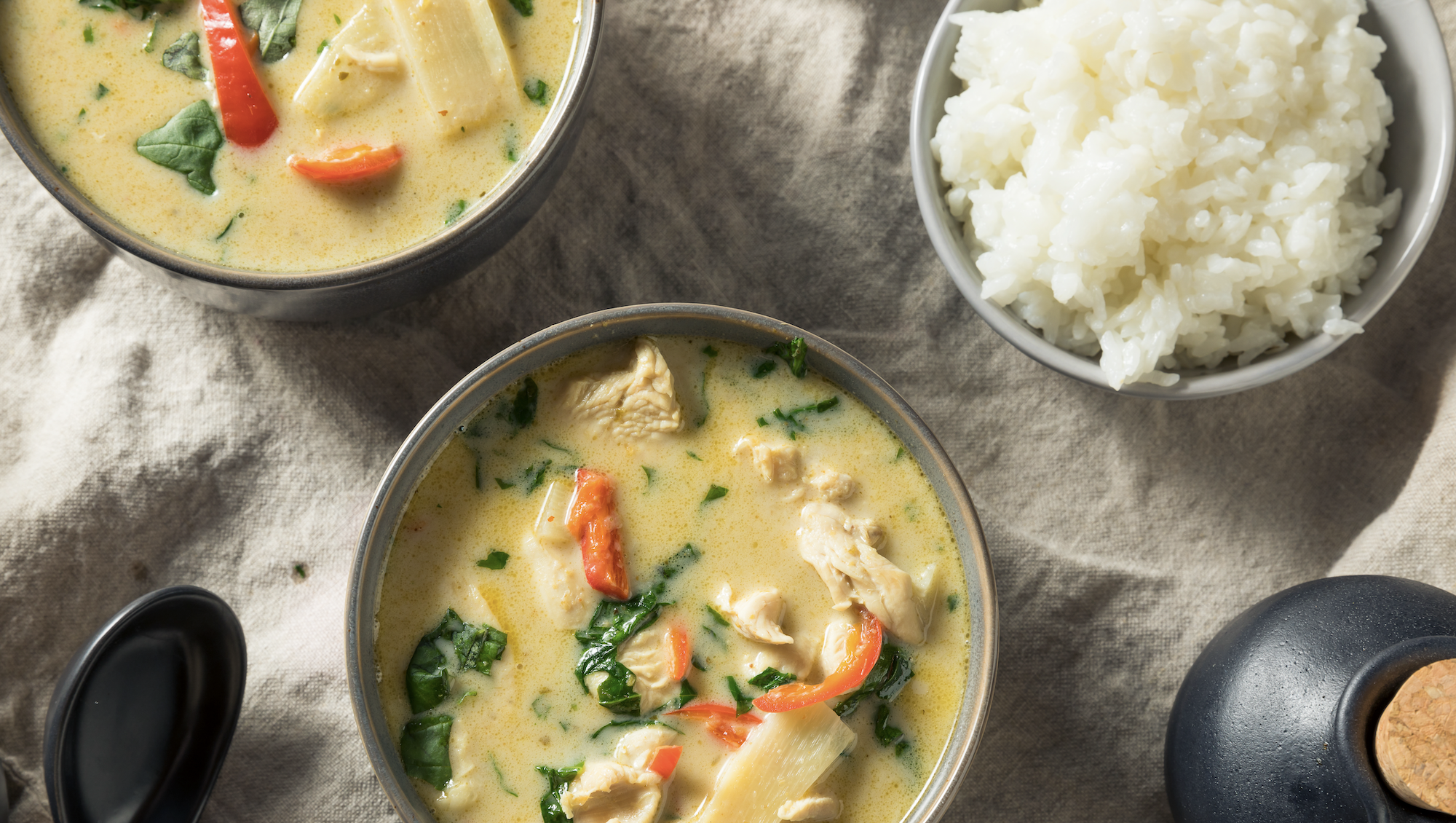
When we talk about Thai curry, one of the most familiar images is a bowl of rich curry served alongside a plate of steaming rice.
But have you ever wondered why Thai people traditionally eat curry with rice?
And more importantly—does curry always have to be eaten with rice?
The answer is not at all!
Thai curry can be enjoyed in many different ways, and some of the combinations might surprise you.
Why Do Thai People Eat Curry with Rice?
One of the main reasons is simple: rice is a staple food in Thailand.
Especially steamed rice, which has a relatively mild flavor and pairs perfectly with rich, flavorful dishes like Thai curry.
Thai curries can bring a combination of spicy, salty, sweet, and aromatic flavors, while rice helps balance those stronger flavors and makes them easier to enjoy.
Simply put:
Curry = Flavor
Rice = Balance
That's why combinations like green curry with steamed rice, red curry with rice, or Panang curry with rice are so familiar on Thai dining tables.
So, What Else Can You Eat with Thai Curry?
Rice isn't the only option!
1. Khanom Jeen
This is one of the most classic pairings in Thai cuisine.
Green curry with Khanom Jeen is a well-loved combination. The soft, delicate rice noodles work beautifully with rich and flavorful curry.
And green curry isn't the only curry served with noodles.
Nam Ya + Khanom Jeen is another classic Thai combination that shows just how well curry and noodles can work together.
2. Roti
When it comes to curry and roti, you might first think of Indian cuisine. But in Thailand, roti is also enjoyed with rich and flavorful curries.
The soft, flaky roti works perfectly for scooping up the curry sauce.
Rich curry + roti = a seriously good combination.
3. Noodles
Some Thai curries can also be transformed into noodle dishes.
Instead of serving curry with rice, try pairing the curry flavors with noodles and adding your favorite meat, seafood, or vegetables.
It's a simple way to turn a familiar curry into something completely different.
4. Bread
It might not be the most traditional pairing, but rich curry and bread can work surprisingly well together.
Especially when you have leftover curry from the previous meal.
Instead of reheating it and serving it with rice again, try dipping some bread into the curry sauce.
Leftover curry? Problem solved.
5. As Part of a Thai Meal
In reality, Thai people don't always eat curry as a standalone dish.
A typical Thai meal can include several dishes on the table:
Curry + Stir-Fry + Chili Dip + Vegetables + Egg + Rice
Each dish brings a different flavor, and people can mix and match bites throughout the meal.
This variety is one of the things that makes Thai food culture so unique.
Why Does Thai Curry Pair So Well with Different Foods?
Because Thai curry isn't just about being spicy.
Its flavor comes from a complex combination of ingredients such as chili, garlic, shallots, lemongrass, galangal, makrut lime leaves, and spices.
These ingredients create a rich and aromatic flavor base that can pair beautifully with milder foods.
Rice? Yes.
Khanom Jeen? Absolutely.
Noodles? Why not.
Roti? Definitely.
Bread? Give it a try.
That's what makes Thai curry so versatile.
It's not just one dish.
It's a flavor base with endless possibilities.
THAI pastes you might like
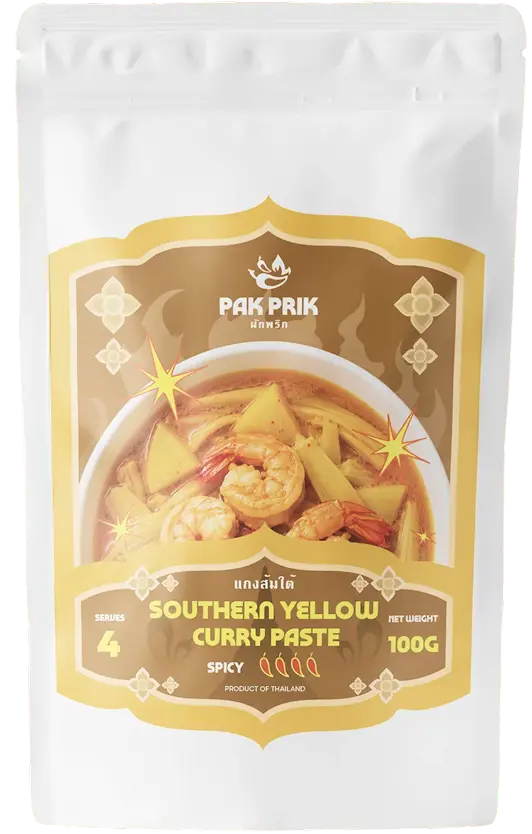
Southern yellow curry paste
A bold Southern Thai curry paste infused with turmeric and aromatic spices, delivering the authentic spicy and tangy flavors of traditional Southern sour curry.
THB 100.00
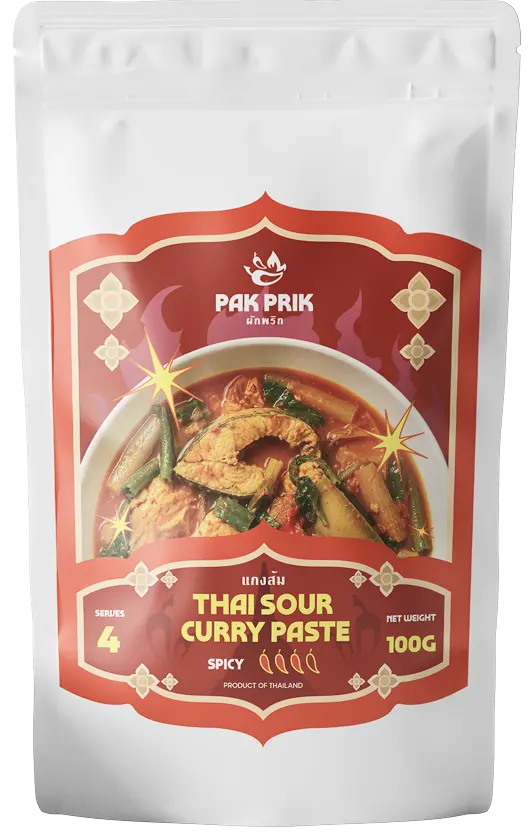
Thai sour curry paste
A vibrant blend of tangy and spicy Thai spices, perfect for creating authentic sour curry with its distinctive bold and refreshing flavor.
THB 100.00
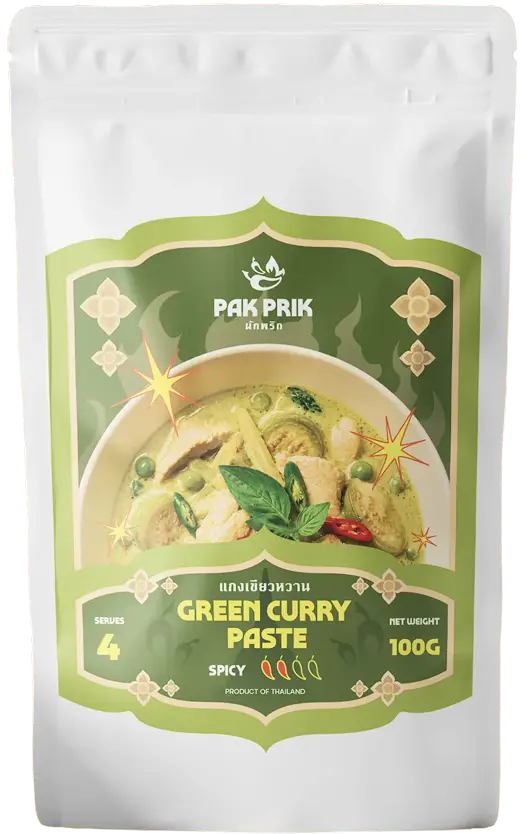
Green curry paste
A fragrant blend of green chilies, lemongrass, and Thai basil for an authentic, rich, and aromatic green curry experience.
THB 100.00
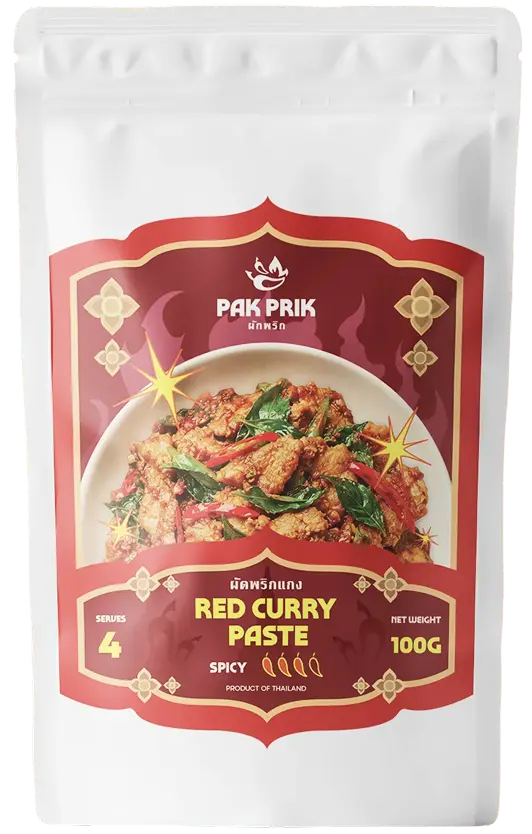
Red curry paste
A bold and savory Thai curry paste, stir-fried to release its aromatic spices, delivering rich flavor and satisfying heat in every bite.
THB 100.00